
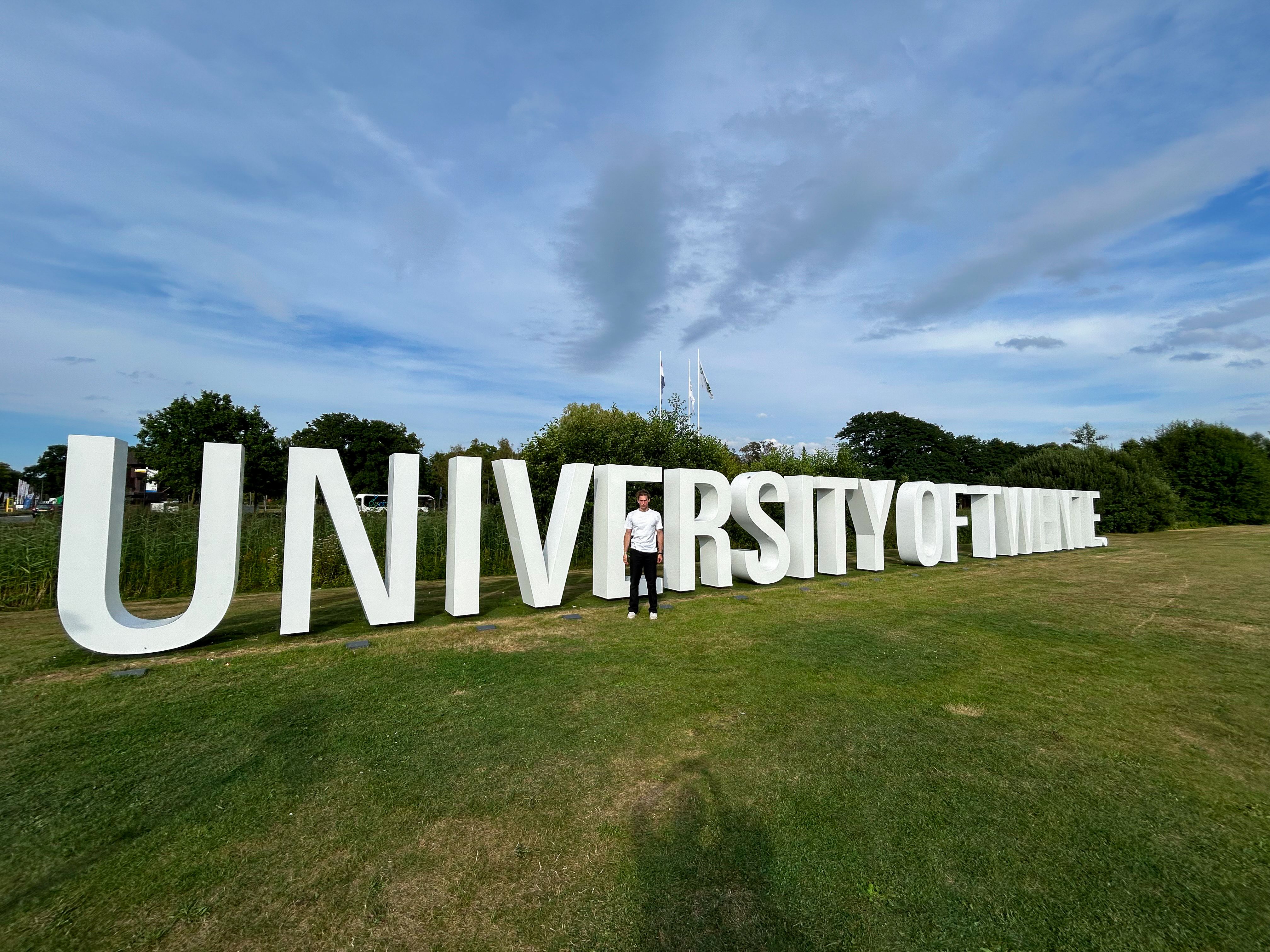
CSG Foundation scholarship holder Ondřej Pazourek has started a bachelor’s degree in Technical Computer Science at the prestigious University of Twente in the Netherlands. We asked him about his first impressions of his studies and his new surroundings.
1. Why did you choose this particular university and programme?
I chose the University of Twente because it combines theory with practical application really well. I was also drawn to its reputation as a prestigious European university with an international environment that encourages an innovative, interdisciplinary approach to education.
2. How would you rate the quality of the teaching and the lecturers’ approach?
The standard of teaching is very high. The course materials are challenging and thought-provoking, which makes me want to understand the subject in more depth. The lecturers are helpful and approachable – whenever we have questions, we can ask them in person or online. There are also teaching assistants who help us get to grips with more difficult topics.
3. How are you finding studying in another language?
It was tough at first, but the terminology used in computer science is fairly universal, so I got used to it quite quickly. Over time, I’ve managed to improve both my technical and general English, and I now feel much more confident in my studies and when communicating with others.
4. What has been the hardest part of living abroad so far?
The hardest part has been adapting to a new environment and having to be completely independent. You have to get used to being responsible for everything yourself, from your studies to day-to-day life.
5. How did you deal with practical matters such as visas, insurance, and accommodation?
I managed most of the admin with the help of detailed instructions from the university, which is very supportive of new students. The hardest thing by far was finding suitable accommodation in the Netherlands, where demand is very high, so I’d definitely recommend starting your search as early as possible.
6. How did you find the cultural differences?
It was a bit difficult at first because naturally you express yourself best in your own language. But I got used to it over time, and now I see cultural differences as one of the things that makes the experience richer. It’s interesting to hear different perspectives on the world and talk to people from different backgrounds, and it helps you form strong connections with people from other cultures.
7. How did you find accommodation, and what has your experience been like?
As an EU student, I had to find my own accommodation. So I started looking well in advance and replied to listings on reputable Dutch websites and in student Facebook groups. That paid off, and I managed to find somewhere suitable.
8. How do you spend your free time outside university?
Our timetable is pretty demanding – usually from 8.45 am to 5.30 pm, with an hour for lunch. In my free time, I try to unwind by staying active: I go running and work out at the gym, and I spend time with friends, who help me maintain a good balance between studying and my personal life.
9. Have you made friends with local students or other international students?
During induction week for new students, I had the chance to meet people from lots of different countries. These days, I mostly spend time with international students because they make up most of my social circle. Dutch students tend to stick more to their own groups, but I’ve got to know a few of them too.
10. What do you feel you are getting most out of studying abroad?
What I get most from it is the chance to discuss IT concepts with people from different cultural and academic backgrounds. Everyone brings a different perspective, which gives me new ways of looking at things. I’m also becoming more independent and disciplined, and gaining a deeper understanding of the practical side of computer science.
11. What experience or skills do you think you’ll use when you come back?
I’ll definitely use the practical knowledge and skills I’ve gained during my studies, particularly in programming, teamwork, and project management. My experience of studying in an international environment will also be valuable, as it has helped me become more flexible and improve my communication skills.
12. What do you like most of all about studying and living abroad?
What I value most is being able to study something I genuinely enjoy while also seeing more of the world. Every day I meet people from all over the world, which means I’m constantly learning and developing as a person too.
13. Has anything really disappointed you so far?
Nothing has really disappointed me so far. Everything is more or less what I expected, and it’s still too early to make a long-term assessment of either my studies or my overall experience here.


