

CSG Foundation scholarship holder Josef Kahoun has started a master’s programme in Systems, Control and Robotics at KTH Royal Institute of Technology in Sweden. We asked him about his first impressions of both his studies and his new surroundings.
How are you finding the university and the city you’re studying in?
I love it. The campus and university buildings are really beautiful, and there’s a huge park nearby, which is great for a walk between study sessions. The lecture halls and classrooms are fairly similar to those at CTU, just a bit more modern. Another thing I really like is how many student events there are. The university itself has several places around campus where students can meet up, including the library and student pubs. Stockholm is an amazing city, and because the campus is quite close to the centre, we get plenty of chances to go out and see the sights.
Why did you choose this particular university and programme?
I chose the programme because it was a natural follow-on from my bachelor’s degree. I chose KTH partly because of Stockholm, but also because it offers lots of courses in machine learning and the use of artificial intelligence in robotics, which are exactly the areas I wanted to focus on. There aren’t too many compulsory courses either, so you can really tailor the programme to what you want to do.
What were your first impressions when you arrived?
I was absolutely thrilled. The university even arranged transport for us straight from the airport to campus, so the very first thing I saw was literally the campus entrance. Then came all the admin, like getting access to the buildings and setting up my university email, which I’d been a little worried about, but they helped us with everything and it all went completely smoothly, with no hassle or stress.
How is teaching different from what you were used to in the Czech Republic?
The semester here is split into two parts, known as periods, each worth 15 credits. Most people only take two courses at a time, but they do them in half the time we would back home. The good thing about the system is that you only have to focus on those two courses at once, so you don’t usually turn up to a lecture with no idea what you covered last time. The pace is much faster, though, and it’s more intense. There are deadlines for projects and assignments every week, so there’s always something to do and you never really stop.
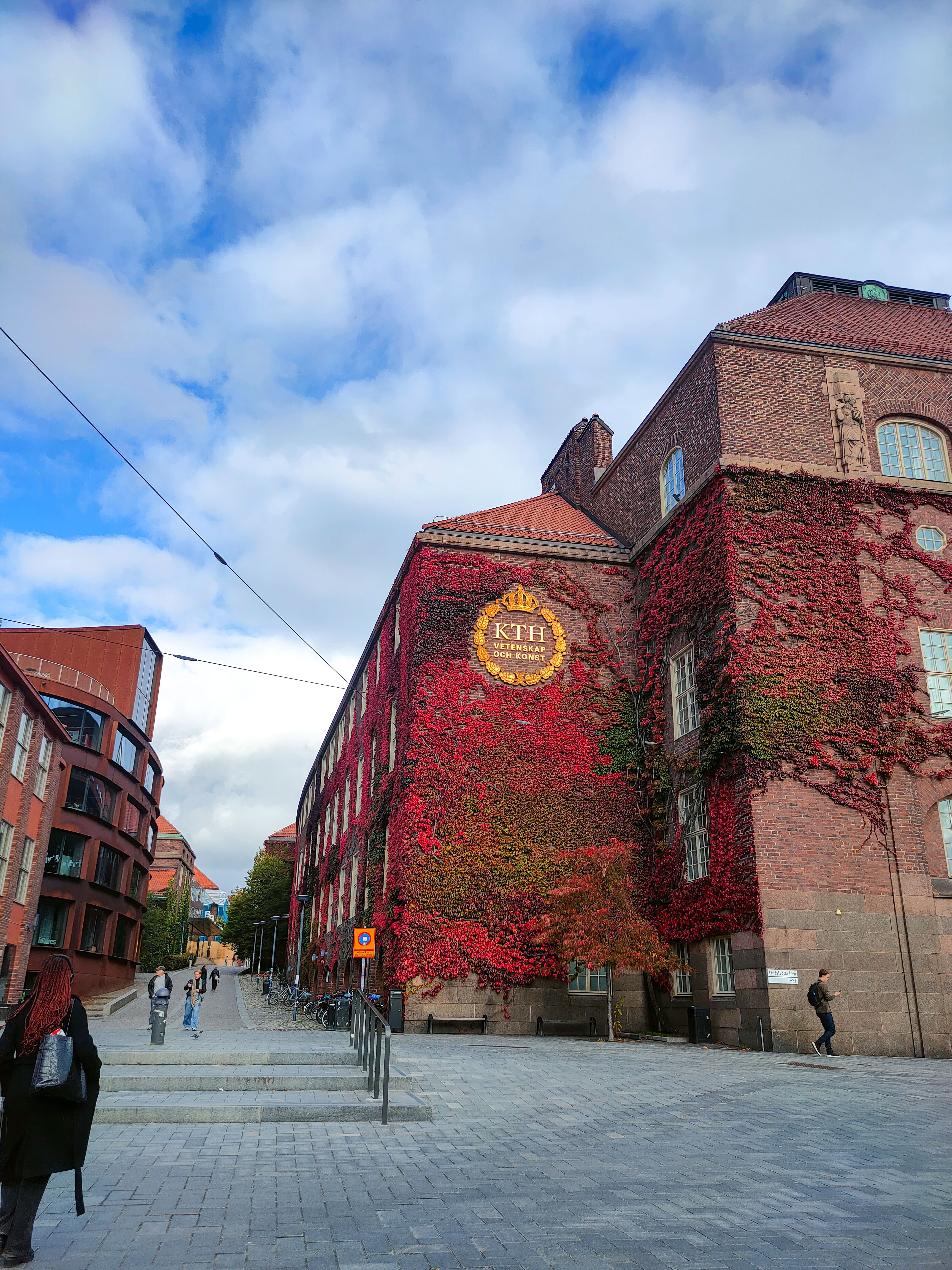
KTH Royal Institute of Technology
How would you rate the quality of the teaching and the lecturers’ approach?
Obviously it depends on the individual course and lecturer, but so far I’ve only had positive experiences. The standard of the lectures is really high, and most of the professors are absolutely brilliant teachers. There are also teaching assistants, or TAs, on hand for classes and to help out during the semester. They’re usually final-year master’s students or PhD students. Again, it depends on the person. I’ve had TAs who could clear up anything that hadn’t made sense in the lectures, but I’ve also had some who just weren’t very good at getting their knowledge across.
What has interested or surprised you most about studying there so far?
Definitely student life, because at CTU, at least, that side of university life wasn’t really a thing. At KTH, students are divided into what they call chapters, which are basically student associations, and each one organises its own events, from board games to parties. Every chapter even has its own pub or bar, so students can go for a pretty cheap beer in the evening and have a chat.
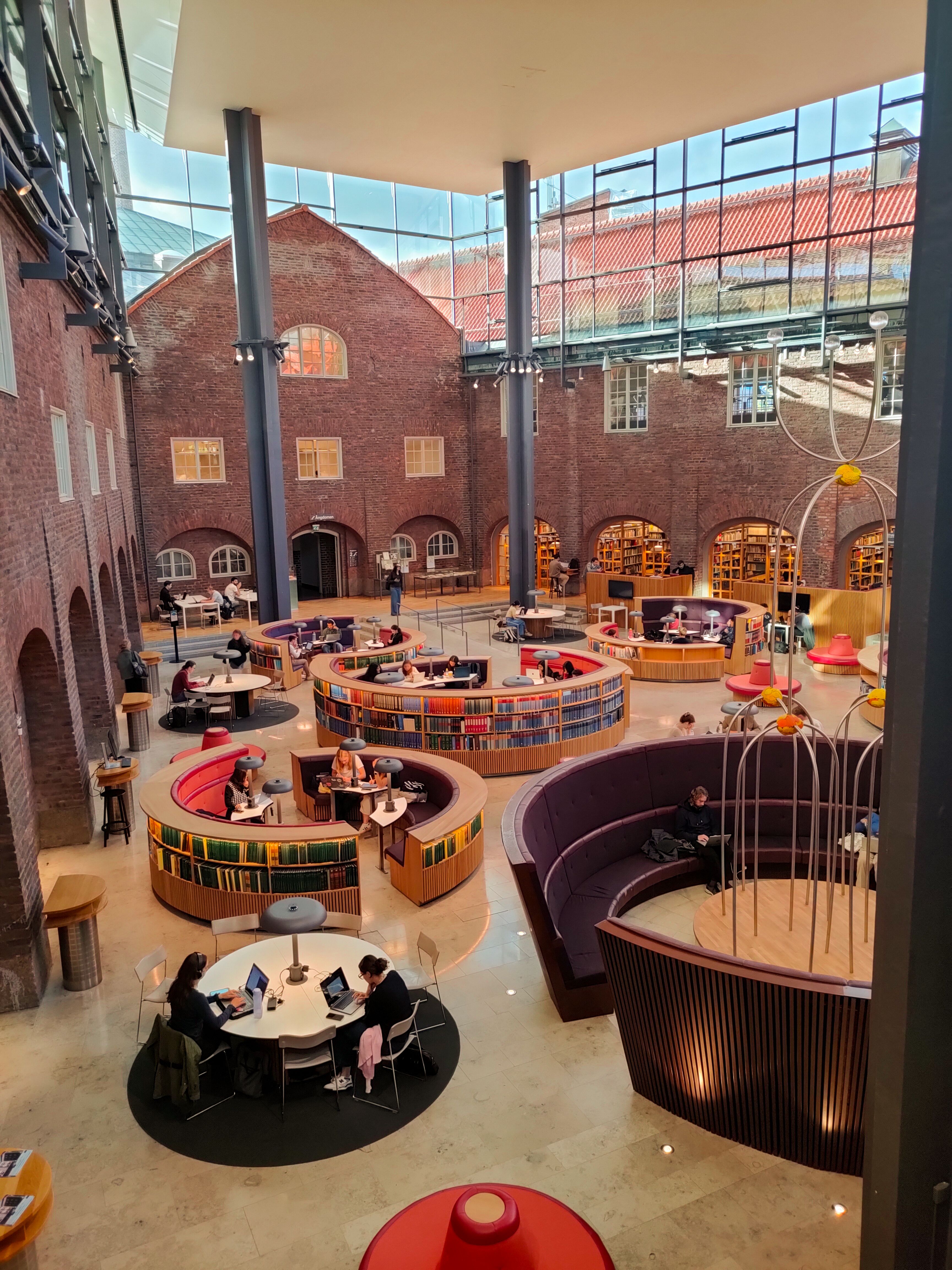
KTH Royal Institute of Technology
How are you finding studying in another language?
No problem at all. English has never really been an issue for me, and I’d also been preparing for an English language exam before sending off my applications, which definitely helped. I wrote my bachelor’s thesis in English, so I’d already got used to academic English, and I knew most of the terminology in my field in English anyway. So I haven’t really had any problems with the language.
What has been the hardest part of living abroad so far?
Definitely being away from my family, friends, and girlfriend. Luckily, Stockholm is only a two-hour flight from Prague, so I can get back to see them fairly often.
How did you deal with practical matters such as visas, insurance, and accommodation?
Luckily, as an EU student I didn’t have too much to sort out. It was really just insurance, which I arranged back in the Czech Republic, and accommodation, which was a bit of a headache. Once I arrived, I also had to get a voter’s card, but that only took one trip to the embassy and it was sorted.
How did you find the cultural differences?
The culture here isn’t all that different, so there wasn’t too much to get used to. One of the main differences that comes to mind is that students are on first-name terms with professors. In fact, everyone is on first-name terms with everyone else. Everyone is treated as an equal, which feels like a bit of a Swedish motto. Attitudes towards alcohol are also quite different, especially compared with the Czech Republic. You can’t drink in public at all, only at home or in bars and pubs, where it’s pretty expensive. Most alcohol can only be bought from Systembolaget, a specialist state-owned chain.
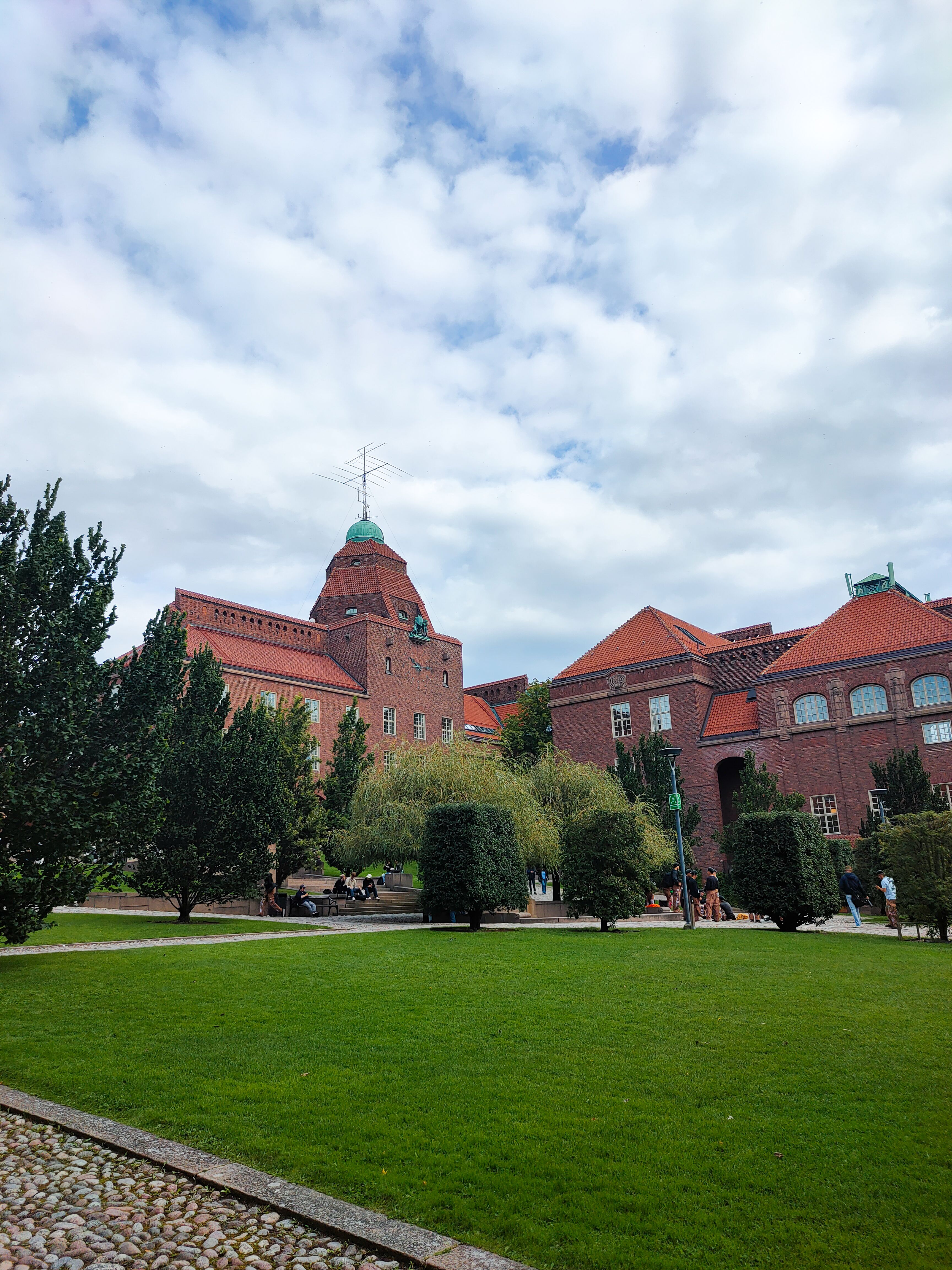
KTH Royal Institute of Technology
How did you find accommodation, and what has your experience been like?
I found mine through akademiskkvart.se, where people advertise rooms for students. Finding somewhere was difficult, though, because demand is so high. I know people who arrived without having found anything at all, or who only had emergency accommodation for a week. One person even spent five days camping in a park before finding somewhere. Lots of people also advertise accommodation in Facebook groups – just watch out for scams! You can also try local websites and marketplaces, such as Qasa in Sweden. There’s also SSSB, which provides student accommodation at pretty good prices. You join a waiting list and build up points every day, then apply for accommodation depending on how many points you have. The problem is that you only start earning points once you’re officially enrolled as a student. You can collect a few beforehand, but usually not enough to get a room, so you still need to find something else for the start of your studies.
How do you spend your free time outside university?
Mostly with friends. We go to the student pubs and meet new people. I also run, climb, and swim, as there’s a swimming pool about three minutes from the university. We sometimes head into the city or out into the countryside too. And of course there’s the daily fika, the Swedish coffee break where you stop for a bit and relax. I also spend quite a lot of time cooking, because eating out here is pretty expensive, and even the student canteens aren’t cheap.
Have you made friends with local students or other international students?
Yes, loads. I have to say, most people here are incredibly friendly. Apart from the Swedes, who are actually a minority on our programme, I’ve met people from Italy, Portugal, Colombia, the US, Germany, China, Romania, and plenty of other places.
What do you feel you are getting most out of studying abroad?
Studying abroad was a big step into the unknown for me, but looking back, I’m so glad I did it. My studies and the chance to work and communicate with people from all over the world are giving me a huge amount of new experience. I’m becoming more independent and confident, and more willing to try new things.
What experience or skills do you think you’ll use when you come back?
My English is definitely getting a lot better, which will obviously be useful. The programme also puts more emphasis on developing soft skills, project management, and teamwork. Next semester I’d also like to find an internship, which I hope will help me take the next step in my career.
What advice would you give other students planning to study abroad?
Definitely go for it, because it really is a unique experience. Most importantly, don’t leave your application too late. At quite a few universities abroad, you have to apply more than six months earlier than you would in the Czech Republic. I’d also try to sort out all the practical things, like insurance and accommodation, as early as possible, because if you leave it until the last minute, there may not be much left to choose from – and you don’t want to spend your first week at university camping in a park.
What do you like most of all about studying and living abroad?
Definitely spending time with the people I’ve met here. Hearing about their experiences and talking about the differences between our cultures, politics, and even the weather is really interesting. I have to say I’ve been incredibly lucky with the people I’ve met. They’re all really great, smart, and interesting.
Has anything really disappointed you so far?
I wouldn’t say disappointed exactly, but the winter weather can get a bit depressing sometimes because the sun can set at around three in the afternoon. If you finish classes at four and it’s already dark outside, it’s not exactly uplifting. That’s why all the students here take vitamin D.


